CASE STUDY · ALBORADA BILINGUAL SCHOOL · 2020–2021
El colegio cerró. Había que seguir enseñando.
ROLE
Learning designer, materials designer, faculty trainer
LEARNERS
High school, EFL and History
TIMELINE
One academic year, 2020–2021
TOOLS
Canvas, Google Classroom, Illustrator, InDesign, Animate

~1,000
students across three levels
200+
high schoolers using my materials
30
teachers trained, four subject areas
3
platforms, one class model
The challenge
The shift exposed gaps in the whole instructional model. The goal: rebuild learning for digital delivery while keeping curriculum standards.
Before 2020
Printed textbooks
Santillana, National Geographic
Lecture-based
Learning happened in the room
No LMS
No online assignments or workflow
New to online
Most teachers had never taught online
My role
Platform
Learning architecture
Defined course structure, navigation, and workflows with IT and developers.
Materials · individual assignment
Sole booklet designer
EFL and History (bilingual, Social Studies dept.), multiple high school levels.
Enablement
Faculty trainer
~30 teachers in EFL, History, Social Studies, and Math.
Worked with IT, developers, level tutors, and area coordinators.
Process · ADDIE · one academic year
What I found, what I designed
No shared platform
→
One class model for every subject, built with tutors and coordinators
Teachers new to online
→
Tiered training: whole-school workshops, then hands-on by area and grade
No textbooks at home
→
Self-contained downloadable booklets
Built for classrooms
→
Booklets that support live classes, not replace them
Bonus: families didn’t have to buy new books during a hard economic year.
Instructional design
BEFORE
AFTER
→
→
→
→
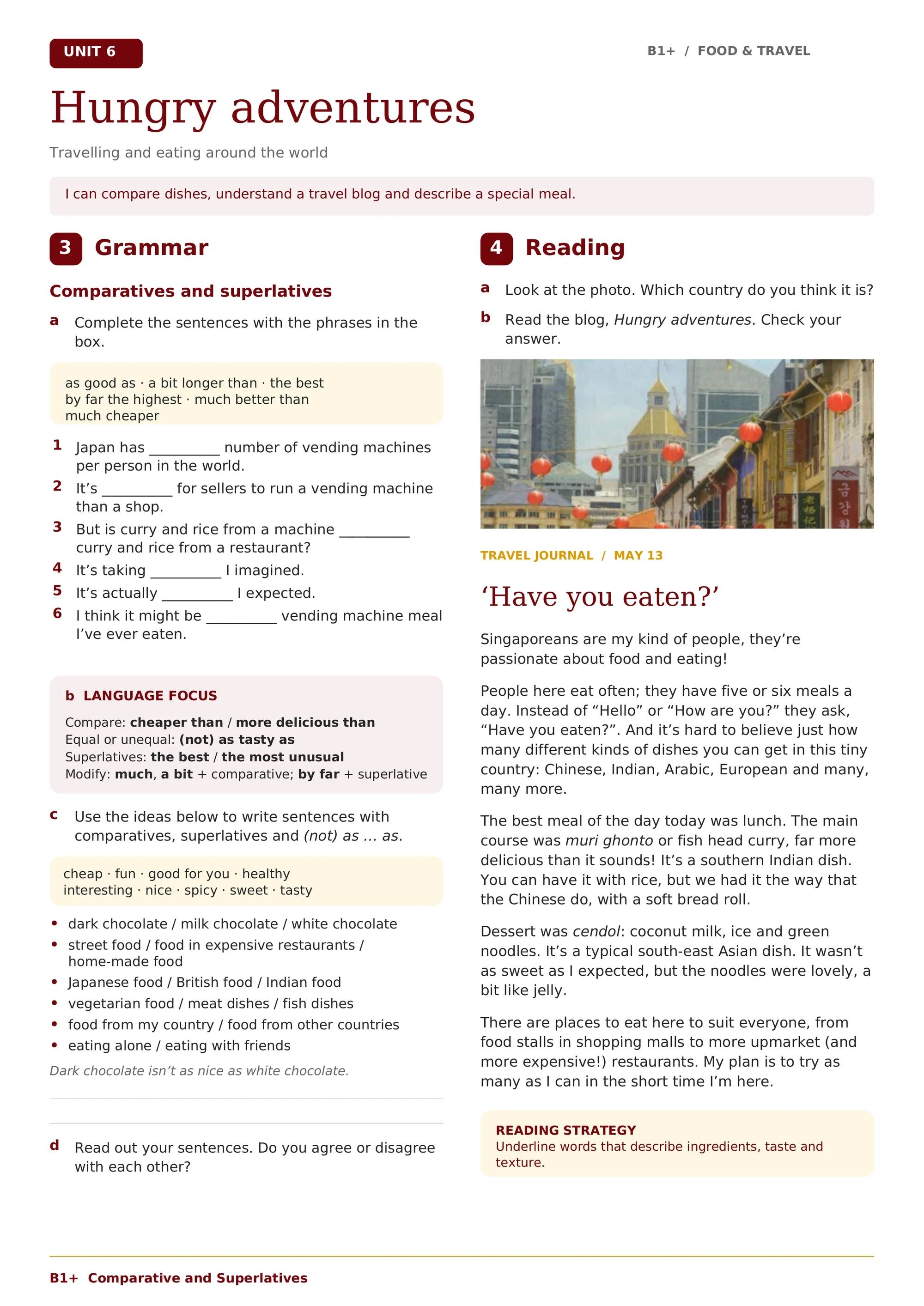
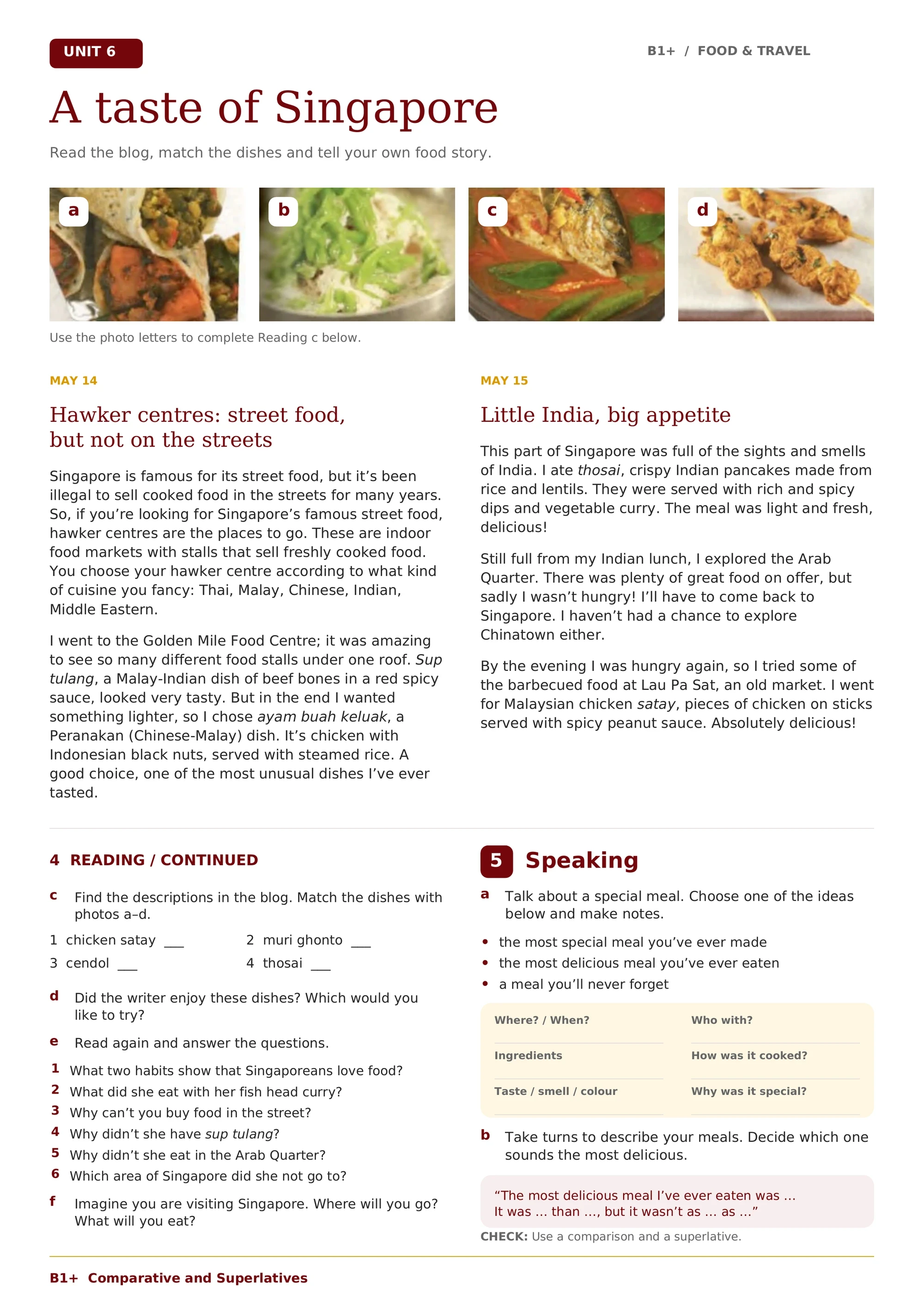
Artifact · booklets
CEFR-aligned EFL units, built to work alone at home and alongside live classes.
Design choices
Goal first
A can-do statement opens every unit.
Rules made visible
Language-focus boxes summarize the grammar.
Strategy, not just tasks
Reading-strategy callouts teach how to read.
Scaffolded speaking
Note frames and a model sentence before students talk.
Self-check
Each task ends with a clear check.
Unit 6 · B1+ · Comparatives and superlatives: grammar, reading, and speaking. Reading text adapted from coursebook material; layout and activity design by me.

9th grade EFL, front and back cover. Illustrator, 2021.
Artifact · platform architecture
I helped define what each role needed, so one platform could replace scattered emails, chats, and Zoom links.
Before
Separate emails, chats, and Zoom links for every teacher and subject. Students and families lost track.
After
One platform, one login, open to everyone all the time.
Aula Virtual
One shared class model for every subject
Teachers
Create and manage
Upload planning, assignments, and materials
Academic reinforcement
Grade and send feedback
Take attendance
Send announcements
Students
Learn in one place
Live class links
Materials and assignment details
Grades, feedback, reports
Every teacher’s contact and chat
Families
Stay informed
Notifications for every announcement
Visibility into their child’s progress
Coordinators
Monitor quality
Live progress by subject
Corrections in real time
Administration
Support the school
Attendance
Student database by course
Academic needs routed to counseling and finance

Student view: today’s live classes, assignments, feedback, announcements, and every teacher in one place.

Teacher view: planning, materials, grading, attendance, and announcements that also notify families.

Family view: notifications on their phone.
Aula Virtual concept, structured with ADDIE. Interface, illustrations, and mascot by me. Sample names and data are illustrative.
Faculty enablement
01
Orientation
LMS basics and workflow
02
Lesson structure
Modular, sequenced lessons
03
Activity design
Discussions and group tasks
04
Online assessment
Rubrics and feedback
30
teachers completed the full path · EFL, History, Social Studies, Math
Artifact · identity
All illustration, layout, and animation by me.
Illustrator
InDesign
Animate
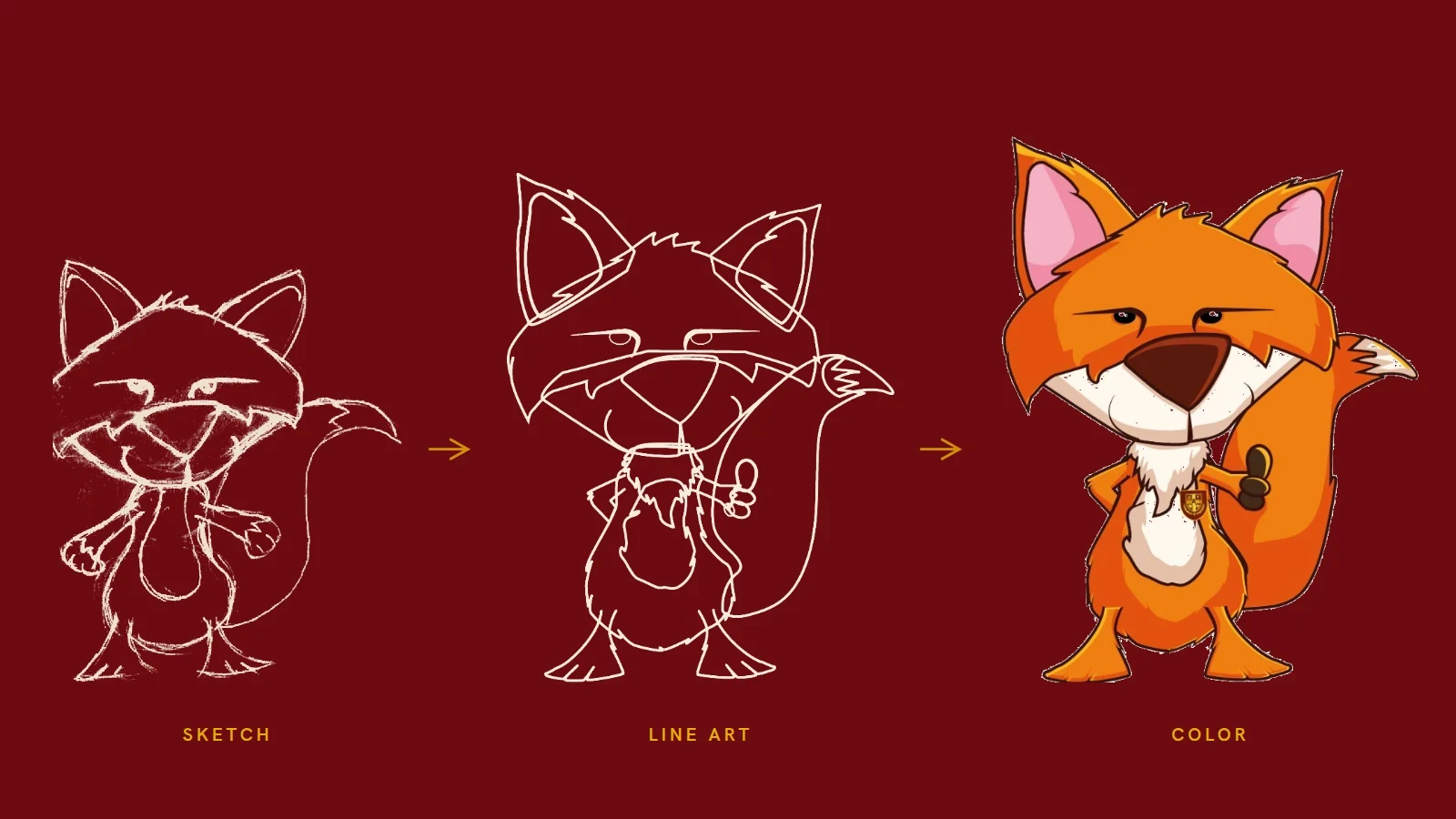

One fox, three levels: kindergarten, elementary, high school.
Rigged and animated in Adobe Animate: bone rig on the left, final animation on the right.
The school’s existing crest, illustrated and animated by me for learning materials and platforms, keeping Alborada’s brand intact.
Outcome
The school kept the booklets the following year, lowering costs for families. When classes moved back to campus, the platform stayed.
During the pandemic
Better academic results
Academic reports and performance improved.
Less teacher overtime
One system meant no duplicated work.
Clearer communication
No more lost links and scattered messages.
Families’ trust
Parents saw their children keep learning.
After reopening
Continuity
Ready for closures, such as natural disasters.
Self-paced learning
Students review material asynchronously.
Modernization
A step toward a more current, tech-ready school.
Reflection